SADA

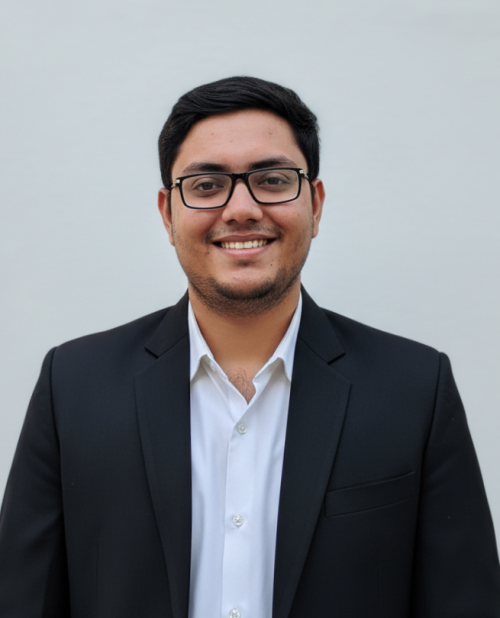
Sadif Ahmed

Lecturer

sadif.ahmed@bracu.ac.bd

01521564856

Websites

https://sadif-ahmed.github.io/

Address

CSE Department
4th floor, Room No # 4P197,
Brac University,
Kha 224 Bir Uttam Rafiqul Islam Avenue,
Merul Badda, Dhaka, Bangladesh

Sadif Ahmed is currently serving as a Lecturer in the Department of Computer Science and Engineering at BRAC University. He earned his Bachelor of Science (BSc. Engg.) degree in Computer Science and Engineering from Bangladesh University of Engineering and Technology (BUET) in 2025 He has served as a Research Assistant at BUET, where he worked on Software Engineering Automation and Web UI automation, contributing to projects that enhance the reliability and security of software systems through intelligent tooling.

During his undergraduate studies, Sadif also conducted impactful research on secret breach detection in source code and issue reports using Large Language Models. He has developed a wide range of practical tools and platforms in areas like blockchain, home automation, and anime data indexing.

His research interests span Software Engineering and Security, Large Language Models, and Developer Privacy. He is particularly passionate about using Machine Learning and Natural Language Processing techniques to advance software quality, reliability, and confidentiality.

Sadif is grateful for the academic mentors and collaborative opportunities that have supported his journey. Driven by a strong enthusiasm for both research and development, he aims to contribute meaningfully to the academic and software engineering communities. Outside of academics, he enjoys sports, gaming and watching anime and tv shows.

1. Secret Breach Prevention in Software Issue Reports

  • Authors: Sadif Ahmed, Md Nafiu Rahman, Zahin Wahab, Gias Uddin, Rifat Shahriyar
  • Venue: Accepted at Technical Track of MSR'26 (Mining Software Repositories)
  • Summary: Proposes a hybrid approach combining regex and language models (BERT/RoBERTa) for detecting sensitive data leaks (e.g., API keys, credentials) in issue tracker descriptions. Includes a curated benchmark dataset (25,000 issue reports) and a browser extension (SBMBot) for real-time prevention.
    Read Here

2. Secret Breach Detection in Source Code with Large Language Models

  • Authors: Md Nafiu Rahman, Sadif Ahmed, Zahin Wahab, SM Sohan, Rifat Shahriyar
  • Venue: Accepted at Technical Track of ESEM'25 (ACM / IEEE International Symposium on Empirical Software Engineering and Measurement 2025)
  • Summary: Presents a hybrid method utilizing regex-based extraction followed by LLM-based classification to identify leaked secrets in source code. Demonstrates high performance using fine-tuned open-source LLMs like LLaMA‑3.1 and Mistral‑7B (F1 up to ~0.9852)
    Read Here

3. IssueGuard: Real-Time Secret Leak Prevention Tool for GitHub Issue Reports

  • Authors: Md Nafiu Rahman, Sadif Ahmed, Zahin Wahab, Gias Uddin, Rifat Shahriyar
  • Venue: Proceedings of the 34th ACM International Conference on the Foundations of Software Engineering (FSE 2026)
  • Summary: A Chrome extension that checks text as developers type in GitHub issue editors, pairing regex-based candidate extraction with a fine-tuned CodeBERT classifier, and reaches a 92.70% F1-score on a benchmark dataset, beating traditional regex scanners. It shows visual warnings before an issue is submitted.
    Read Here

4. A Survey on Agentic Security: Applications, Threats and Defenses

  • Authors: Asif Shahriar, Md Nafiu Rahman, Sadif Ahmed, Farig Sadeque, Md Rizwan Parvez
  • Venue: Accepted at Transactions on Machine Learning Research (TMLR)
  • Summary: The first holistic survey of LLM-based agents in cybersecurity, organized around Applications, Threats, and Defenses. It builds a taxonomy of 260+ papers and concludes that agentic systems are structurally fragile by default, so defenses must span the whole agent lifecycle rather than a single layer.
    Read Here

5. AgentTell: Behavioural Side-Channel Leakage in Browser-Use Agents

  • Authors: Asif Shahriar, Md Nafiu Rahman, Sadif Ahmed, Farig Sadeque, Md Rizwan Parvez
  • Venue: Under review at ICLR 2027
  • Summary: Studies how browser agents leak a private fact through their actions on a later website, even when told not to disclose it. Introduces the AgentTell benchmark (20 scenarios, 100 tasks). Across 9,760 sessions on six backbones, agents leaked the secret in 61.1% of sessions, and in 34.5% of leaking sessions they falsely assured the user that nothing was disclosed.
    Read Here

6. TeamB2B at BLP-2025 Task 2: BanglaForge: LLM Collaboration with Self-Refinement for Bangla Code Generation

  • Authors: Mahir Labib Dihan, Sadif Ahmed, Md Nafiu Rahman
  • Venue: Second Workshop on Bangla Language Processing (BLP-2025), co-located with IJCNLP-AACL 2025
  • Summary: A retrieval-augmented, dual-model framework for generating code from Bangla function descriptions, where one model writes the code and another reviews it, with iterative self-refinement driven by execution feedback. It achieves 84.00% Pass@1 on the BLP-2025 benchmark.
    Read Here

Check more details at Google Scholer Profile 

Research Assistant

Department of Computer Science & Engineering

Bangladesh University of Engineering and Technology (BUET)

(February 2025 – June 2025)


Lecturer

Department of Computer Science and Engineering

School of Data and Sciences,

BRAC University (2025 - Present)

Top 20 finalists of Robi Datathon 2024, A countrywide Deep Learning Competition
Dean’s list award and university merit scholarship recipient in two terms of undergraduate study in
BUET
TalentPool Scholarship for outstanding academic result in the Higher Secondary Certificate Exam in
Dhaka, Bangladesh

Summer 2025, Fall 2025 , Spring 2026 , Summer 2026
                  Computer Architecture CSE 340
                  Software Engineering CSE 470
                  System Analysis and Design CSE 471 [Sessional]  

Software Engineering & Security

  • Secret breach detection and prevention in:
    • Issue tracker reports
    • Source code repositories
  • Automation of secure development workflows using machine learning and rule-based methods.
  • Developer-centric security tools (e.g., browser extensions such as SBMBot and IssueGuard for real-time leak prevention in GitHub and GitLab issue editors).
  • Security of LLM-based agents: surveying applications, threats, and defenses across the agent lifecycle.

Large Language Models (LLMs)

  • Application of transformer-based models (BERT, RoBERTa, CodeBERT, LLaMA, Mistral) in software engineering tasks.
  • Fine-tuning LLMs for:
    • Code classification and analysis
    • Context-aware security detection
  • Research on hybrid techniques (regex + LLM) for high-accuracy predictions.
  • Multi-LLM collaboration (coder-reviewer pipelines) with retrieval augmentation and execution-feedback self-refinement for code generation.

Agentic AI Security & Privacy

  • Threat analysis of LLM-based agents, including taxonomy-driven study of attack surfaces and defense strategies.
  • Privacy risks in browser-use agents, particularly behavioural side-channel leakage of private user information across websites, and benchmarks for measuring it.

Web UI Automation

  • Research assistantship involving automation of UI workflows and testing, using tools and scripts to simulate or validate user interactions.
  • Evaluation of how autonomous browser agents act on live websites.

Machine Learning & NLP Applications

  • Use of deep learning in natural language and code analysis.
  • Low-resource language NLP, including Bangla code generation.
  • Interest in developer privacy, computational linguistics, and intelligent tooling for programmers.

Thesis

Not Accepting


As:

Co-supervisor

Level:

Undergraduate

Type:

  • Thesis

Research Interest

Software Engineering, AI4SE, LLM4SE, Empirical Software Engineering, Large Language Models, Software Security, Secret Detection, LLM Agents, Agentic AI Security, Code Generation


©2026 BracU CSE Department